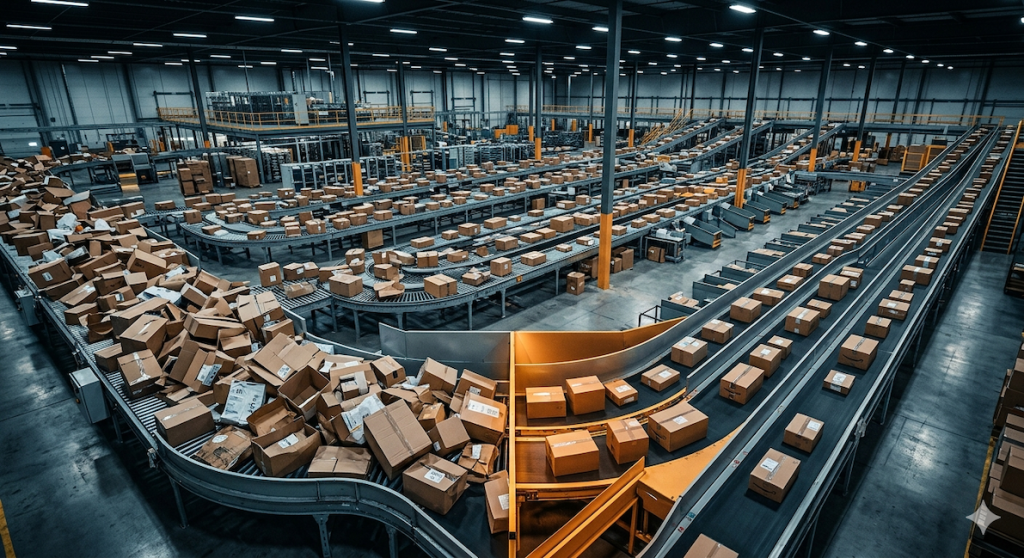
<p>Every logistics manager knows the feeling. A returned item lands back in the warehouse, gets inspected, repackaged or written down, and eventually finds its way to a secondary channel or the bin. Multiply that by thousands of SKUs and millions of transactions, and you have one of the most expensive processes in modern commerce.</p>
<p>The instinct is to fix the process. Faster intake. Better sorting. Smarter routing. Tighter SLAs with carriers.</p>
<p>That instinct is wrong, or at least incomplete. Because the real problem with returns is not how they are handled. It is why they happen at all, and who decided to make them so easy in the first place.</p>
<h2>A Prisoner&#8217;s Dilemma at Scale</h2>
<p>According to the National Retail Federation, American consumers returned 890 billion dollars worth of merchandise in 2024, representing 16.9 percent of total retail sales, and more than double the return rate from just four years earlier. Retailers now spend an estimated 200 billion dollars annually just to recover value from returned goods.</p>
<p>Everyone in the industry knows these numbers are unsustainable. And yet the generous return policies that drive them remain largely intact. Free returns. No questions asked. Instant refunds. Drop off anywhere.</p>
<p>The reason is simple and brutal: no one wants to go first. Any retailer that tightens its return policy risks losing customers to a competitor that has not. So everyone keeps bleeding, collectively, while individually rational actors maintain the status quo.</p>
<p>This is a classic prisoner&#8217;s dilemma. The optimal collective outcome, reasonable return policies across the industry, is blocked by individual incentive structures. The result is a race to the bottom that is extraordinarily expensive for everyone involved.</p>
<p>But cracks are appearing in that consensus. And they reveal something important about where the real leverage is.</p>
<h2>Zalando: Attack the Cause, Not the Symptom</h2>
<p>Zalando is Europe&#8217;s largest online fashion retailer, and for years it carried a return rate of around 50 percent. Half of everything sold came back. The logistics cost of that was staggering.</p>
<p>The conventional response would have been to optimize the returns process, faster processing, better sortation, more efficient secondary channels. Zalando did some of that. But the more important decision was to ask a different question: why are customers returning these items in the first place?</p>
<p>Around one third of Zalando&#8217;s returns are size-related. Customers order a size, it does not fit, they send it back. Not because the product is defective. Not because they changed their mind. Because they could not accurately assess fit before buying.</p>
<p>That is not a logistics problem. That is an information problem.</p>
<p>Zalando began analysing return data by product, brand, size, and customer segment to identify patterns, feeding those insights back into product design, supplier selection, and customer guidance. If a product has a persistently high return rate, Zalando works with the supplier to fix issues with fit, photography, or product descriptions.</p>
<p>They invested in machine learning tools that predict the right size based on a customer&#8217;s purchase and return history. They introduced body measurement technology allowing customers to take two photos and receive a personalized size recommendation. The result was a 10 percent reduction in size-related returns compared to items where no size advice is offered.</p>
<p>In lean terms, they stopped trying to build a better process for handling defects and started eliminating the defect at the source.</p>
<h2>Amazon: Build a Business Model Around the Inevitable</h2>
<p>Amazon took a different approach, and it reveals the other side of the strategic equation.</p>
<p>Where Zalando focused on prevention, Amazon accepted that returns at scale are inevitable and asked how to extract maximum value from each one. They use AI to determine whether a returned item should be resold, refurbished, or liquidated, maximizing recovery value at the individual product level.</p>
<p>For low-value items where the cost of processing a return exceeds the value of the product, Amazon simply refunds the customer and tells them to keep it. This is not generosity. It is math.</p>
<p>They built Amazon Renewed and Amazon Warehouse Deals as dedicated sales channels for returned and refurbished products, complete with their own warranties and quality standards. Instead of pushing returns into the grey market or writing them off, they monetized them through branded channels at scale.</p>
<p>The result is that Amazon has turned what is a cost center for most retailers into something closer to a secondary revenue stream. The infrastructure investment was enormous, but so was the advantage it created.</p>
<h2>What the Research Shows</h2>
<p>A 2026 McKinsey report on reverse logistics made one finding that should change how every retailer thinks about return policy design: 71 percent of consumers say a dynamic, product- and customer-specific return policy would not make them less likely to shop with a retailer again.</p>
<p>Read that again. The assumption that generous, uniform return policies are a competitive necessity is not supported by what customers actually say they want. What they want is a guaranteed refund and a convenient process. The specific terms matter less than most retailers believe.</p>
<p>This opens the door to something the industry has been reluctant to attempt: differentiated return policies based on customer lifetime value, product category, and return history. High-value loyal customers with low return rates get premium terms. Frequent returners or bracket buyers, those who order multiple sizes intending to return most, face more friction.</p>
<p>It is not punitive. It is rational pricing of a service that currently has no price attached to it.</p>
<h2>The Question for Logistics Leaders</h2>
<p>The returns problem will not be solved by better logistics alone. The companies that will gain competitive advantage in the next decade are those that treat returns as a business model question from the start, designing products, pricing, information architecture, and customer segmentation with the true cost of returns built in.</p>
<p>That requires collaboration between logistics, commercial, and product functions that most organizations have never attempted around this specific problem.</p>
<p>The prisoner&#8217;s dilemma is beginning to break down. Zalando has started warning accounts with disproportionately high return rates. Others across Europe are quietly introducing return fees for certain channels or product categories. The consensus is shifting.</p>
<p>The question is not whether the rules of the game will change. It is whether your organization will be ready when they do.</p>

The Return Problem Is Not a Logistics Problem